“Barrraaaa …
ter-raaatt!” Sardar Karnail Singh bellowed across the paddock. And twenty
sad OTs, Officer Trainees, held on to the reins in quiet desperation as their
lives were speeded up an unwelcome notch. We had all been told to lightly spur
our horses upon Karnail Singh’s command, so they would move from a sedate trot
into a canter, the burra trot. We all
took to heart the part about “lightly”, and barely brushed our heels against
our horses’ flanks. In hopes that they would miss the memo and stick to the
rather comfortable slower pace. No such luck. The horses were far better
trained than their riders, and after several seasons of Karnail Singh’s dulcet
tones echoing round their ears, they understood his orders thoroughly.
Wherefore the horses broke into a canter. And several OTs, I am sure, broke
into a sweat.
For a brief spell, I was actually exhilarated by the
sensation. Fingers knotted in the reins, knees clamped tight around the horse,
I fondly imagined that I cut a fine figure. Or at the very least, a less sorry
figure than U---- S---, who on the very first day of riding class had fallen
off a stationary horse and broken his collar-bone. And as usually happens in
such circumstances, I became careless. My grip on the reins must have
slackened. The first I got to know of this was when my steed suddenly
harrumphed and broke into a full gallop. A gallop! With a rider who had mounted
on his own for the first time, only four days prior! What the … well, here
again, I must confess, the fault was largely mine.
There were a few horses in the stables that were
earmarked for the special category of plump, despairing, dewy-eyed lady
officers who almost broke into tears when they entered the paddock. These were
the placid, even-tempered steeds, usually no more than 11 to 12 hands high, who
seemed to maintain the same speed regardless of whether they walked, trotted or
cantered. Then there were what one might term the horses of the general pool.
We gentlemen officers were supposed to try our luck with these. And there were
three horses that were in a class of their own. Nobody, or almost nobody,
wanted anything to do with these. One was the strangely named Budstar, a white
army remount who was born to lead. She had impeccable manners and the general
air of a tolerant regimental colonel. The problem was, she stood more than 16
hands at the withers, and the ground seemed very very far away for a poor city
boy stranded astride her. (I can vouch for this, because eight years later I
was misguided enough to mount up on her for what was meant to be a gentle walk
around the suburbs of Dehra Doon but ended as a wild never-ending gallop across
ploughed fields, including some cauliflower crops that caused chaos in the
squadron.) A second unpopular horse was the aptly-named Touch-Me-Not. This
gelding combined all the loveable qualities of Thomas Silverstein of
Leavenworth and Freddy Krueger of Elm Street. On the first day itself he had
lashed out with a two-legged kick that narrowly failed to decapitate our friend
Tali Temjen Toy. But apparently even the most contrary horse can find a rider.
Rajesh Singh grew up riding horses around the Police Lines in Patna. He was
confident enough, and actually a good enough horseman, to adopt Touch-Me-Not as
his regular mount. And our resident vet from the Indian Foreign Service, Ramesh
Kumar - tall, gangly and experienced - quite liked surveying the horizon from
the exalted height of Budstar.
Which left the third horse that nobody wanted to ride.
Dara. A handsome muscular deceptive son of Belial with a coat like gleaming
milk chocolate and a twinkle in his eye that sometimes changed into the glint
of scheming evil. Guess who set his heart on riding this good-looking rogue? Oh
well. I was much younger then, but I was also much much more foolish, out of
all proportion to my youth.
So it came to pass that I found myself astride several
hundred kilos of rocking horseflesh, accelerating rapidly but not quite
smoothly past the line of the other horses. I barely registered a look of
horrified surprise on the face of a fellow officer as we appeared at his elbow
and then vanished ahead of him. In those few seconds that seemed to last
forever, I squeezed my knees tighter and tighter until my entire lower half
seemed clenched in rigor. I pulled on the reins until I was sure my fingers
would be cut off. All to no avail. Dara thundered on. And I realised that my
situation was about to become more dire.

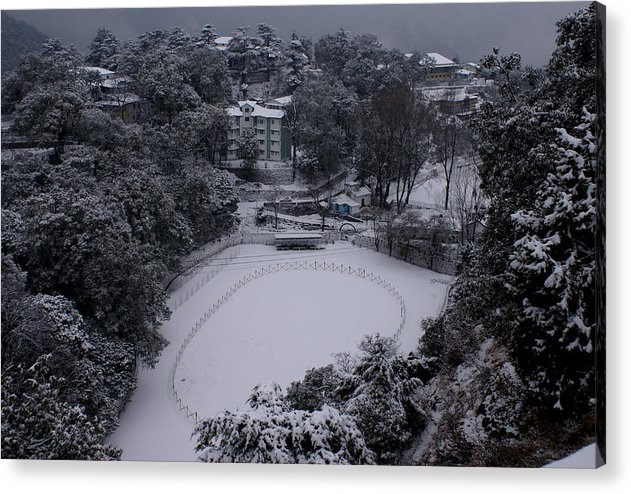
The riding paddock at Charleville is set in a hollow
at the bottom of a hill. The gate from the road is on the only open side. The
other three sides are the natural enclosure formed by the hill slopes, but …
BUT! … buttressed in local granite to a height of twenty feet. And Dara, mad
bad Dara, completed the gallop down one side of the paddock, left the line of
the other horses far behind, turned around the shortest side … and headed
straight for the stone wall at a rate of knots! I was doomed. I knew it. Inside
my stalled brain I could hear a distant yammering. And still I kept up my
futile pull on the reins, and still I squeezed my knees tight until my
circulation gave up the fight. The stone wall seemed to jump closer. It came
into focus despite the bounce and rattle of Dara’s galloping, until I saw the
cracks and dimples made by the chisels, the little clumps of grass between the
edges, the line eight feet up where my head would probably be smashed open ….
Until at the last moment Dara heeled over onto his
right, like a motorcycle banking into a tight turn, and the wall fell away on
my left. My mind went blank with the realisation that I was not going to die a
strange and horrible death between a horse and a hard place. The relief lasted
only for a split second. I realised two things simultaneously. First, that
while I would probably not die, I might be crippled. Because Dara was now
galloping along the outer wall, and so close as to crush my left leg or at
least my left knee against the stone. Second, that the distant yammering was
not just within my head. Sardar Karnail Singh, now in my field of vision, was
bellowing across the paddock “Aise, sahib
… AISE !!”. as he sawed his hands
alternately in front of him. Adrenaline lit up my brain. I realised that Dara
had literally got the bit between his teeth, and the only way to get it back
against the tender part of his mouth and re-establish control was to pull the
reins left and right alternately. Which I did. Immediately. With more strength
in my numb fingers and forearms and aching shoulders than I would have thought
possible.
It worked. The thunder faded. The rocking subsided.
Dara slowed, first to a canter, then to a trot. He ran off the circular sandy
track beaten by the hooves and finally stopped on a patch of wild grass and
weeds. Harrumphed, snorted long and loud, as if laughing at my discomfiture. I
swear he looked back at me, over his shoulder, and all but winked in glee
before he returned to cropping the grass. I was too dazed to even pull his head
up. From somewhere far away I could hear a friend calling “Good show!”. Karnail
Singh, with uncharacteristic kindness, shouted “Saab, utar jaaiye”, that I could dismount if I wanted to.
But I did not dismount immediately. Instead, I pulled
Dara’s head up, slapped him on the neck, tapped my heels into him, and walked
him slowly back to the corner where the syces
waited. Only then did I dismount, in style – first pulling off the riding hat,
then my little fingerless leather gloves, then making a great show of patting
and stroking and reprimanding Dara, before I finally swung off and dropped to
the ground. My apparent savoir faire
was the subject of my friends’ grudging admiration later. Even Karnail Singh
held off from his usual refrain of “Sahab,
kya kar rahe ho, ghodey ko kharaab kar dogey!” What are you doing, you’ll
ruin the horse.
Only I knew the real reason for my apparent
nonchalance. My legs had been trembling so violently that I knew they would not
have supported me if I had tried to get off the horse immediately.